From 130 to 201 tons of CO2 savings: This is how eaternity works at PACE.
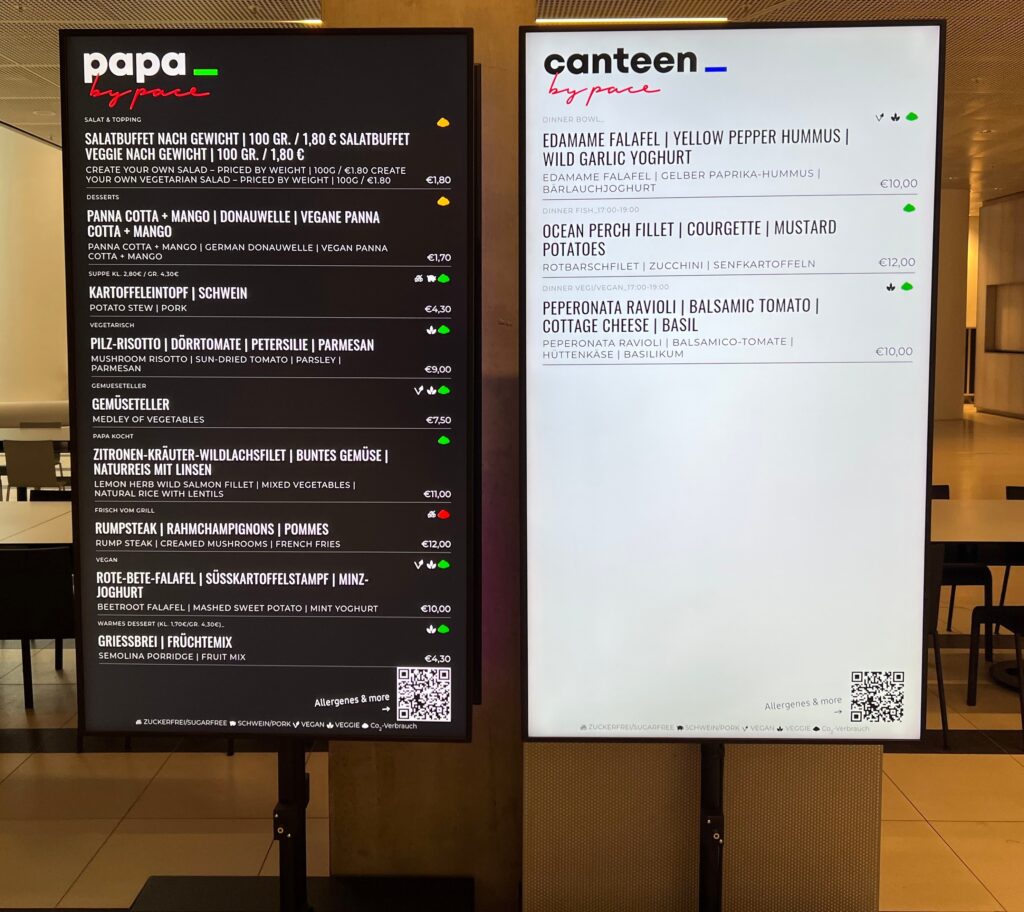
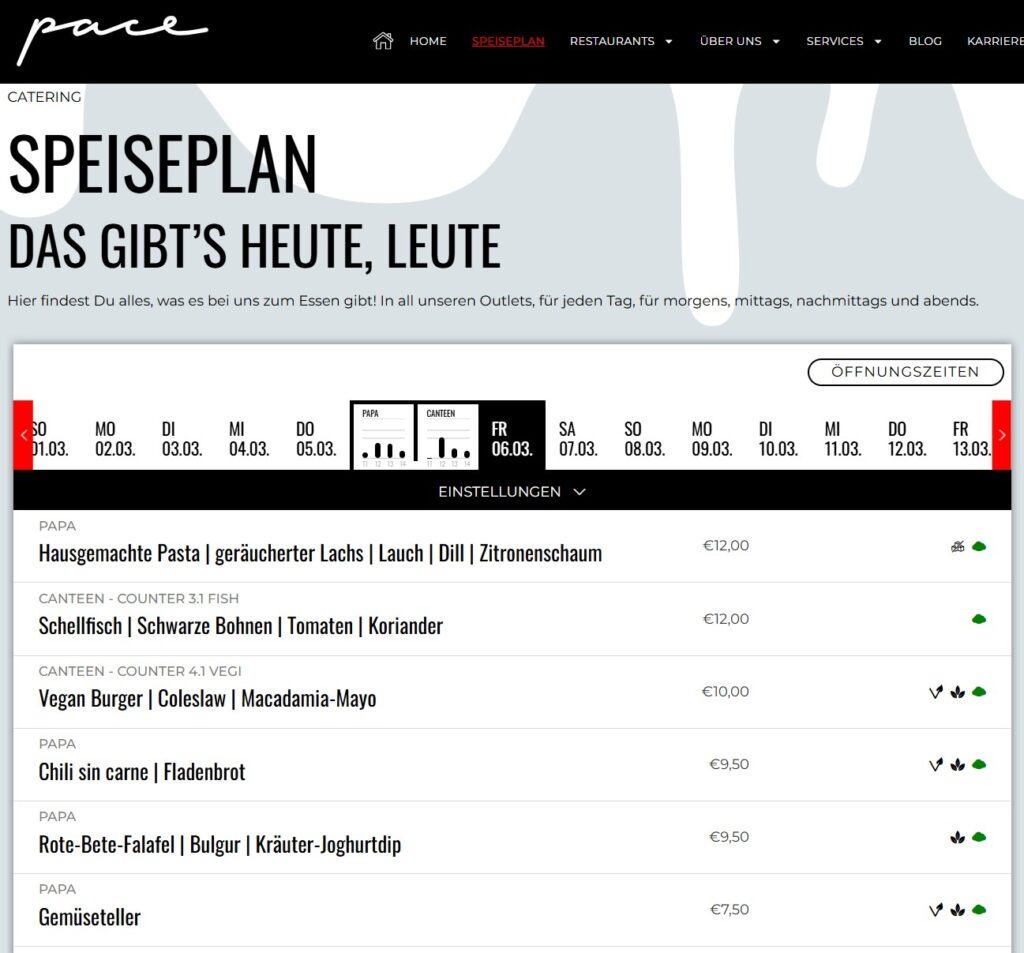
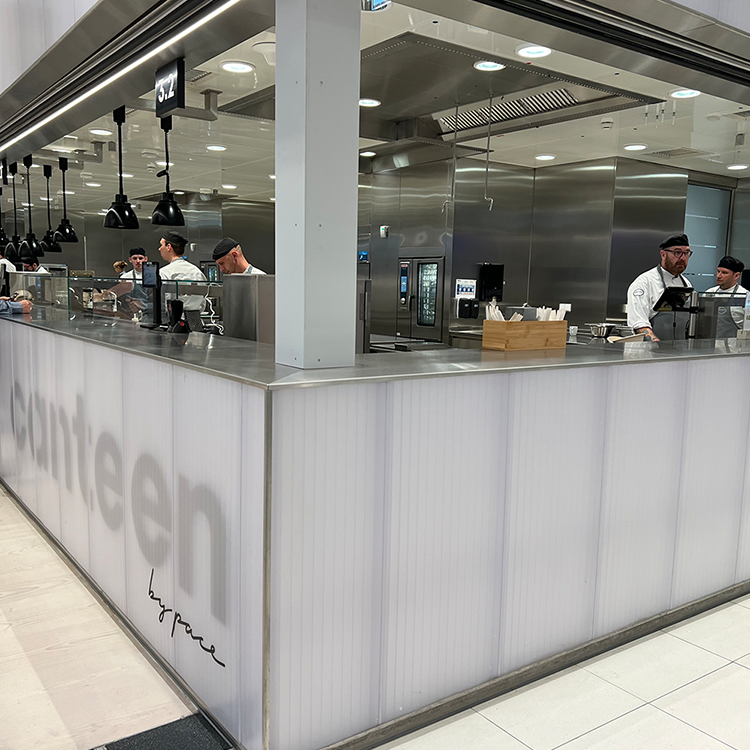
Two years ago, we began working with eaternity to make the CO₂ emissions of each dish visible in our CANTEEN and PAPA restaurants. Our goal was clear: to create transparency, promote awareness, and improve our carbon footprint. The current figures for the last two years show that we have succeeded in doing so.
The figures speak for themselves:
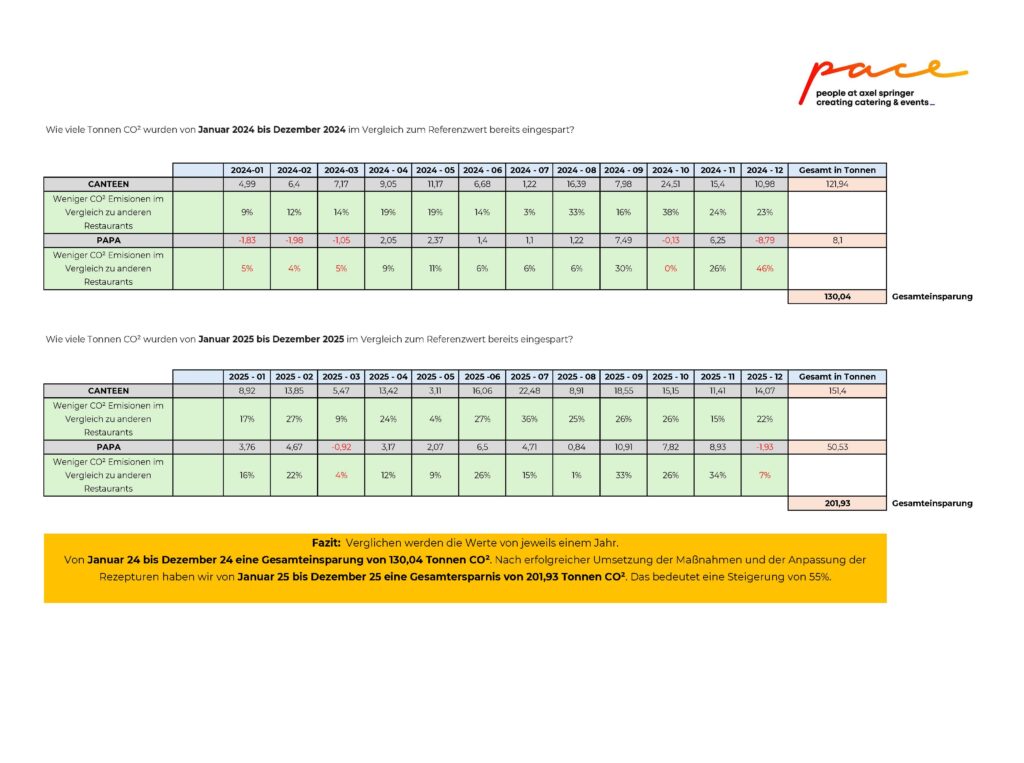
Between January and December 2024, we were able to save a total of 130.04 tons of CO₂ compared to the reference value.
One year later, after consistently implementing our measures and adjusting recipes, the figure stands at 201.93 tons of CO₂ savings from January to December 2025.
This represents a 55% increase in just one year.
What specific changes have we made?
The improvement is no coincidence. It is the result of:
Adjustments to our recipes
more conscious use of animal products
more intelligent use of goods
Continuous evaluation via eaternity
Close cooperation between the kitchen, purchasing, and sustainability departments
Why transparency works:
The CO₂ labeling on our dishes is not just a marketing tool. It is a decision-making aid so that each of you can see:
• How climate-friendly is my meal? • Which alternative has a better carbon footprint?
And it is precisely this transparency that changes behavior. Without sacrifice and without pointing fingers.
Our claim
Sustainability is not a project. It is a process. A reduction of 201.93 tons of CO₂ emissions is an impressive result. But it is not the end goal. We are continuing to work on it.
• Making recipes even more climate-friendly • Raising awareness among you, our guests • Making the impact measurable
Because good food should not only taste good. It should also be responsible.